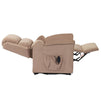
Does the NDIS Fund Lift Recliner Chairs? (And How to Apply)
7 min reading time
If you find a lower price, we’ll beat it by 5%! Contact us to find out more. *T&C's Apply.

7 min reading time
Your client or loved one can't get out of their chair safely anymore. Every transfer is a two-person assist, and falls are becoming more frequent. A mobility recliner chair might be the solution – but will the NDIS cover it?
Here's what you need to know about funding, eligibility, and the application process.
Yes, the NDIS can fund lift recliner chairs – but only when they're medically necessary for safe transfers, not for comfort alone.
You'll need an Occupational Therapist (OT) assessment and report demonstrating the chair meets "reasonable and necessary" criteria under Section 34 of the NDIS Act.
Funding comes from the Capital Supports budget under Assistive Products for Personal Care and Safety.
The process typically takes 4-8 weeks from initial OT assessment to approval, depending on whether the participant's current plan includes appropriate funding.
Not all lift chairs qualify – the chair must be the most appropriate and cost-effective solution for the participant's specific mobility needs.

The NDIS does fund lift recliner chairs, but there's an important distinction: they fund assistive technology, not furniture.
What's the difference? A lift chair is only considered assistive technology when it's essential for safe transfers from sitting to standing due to mobility limitations, fall risk, or other disability-related needs. If the primary purpose is comfort, relaxation, or convenience, it's classified as everyday furniture – and the NDIS won't fund it.
For allied health professionals writing reports, this distinction is critical. Your assessment must clearly demonstrate the medical necessity and link the equipment directly to the participant's disability-related goals.
The NDIS will typically fund a lift recliner chair when:
The participant has significant mobility limitations that make safe transfers from sitting to standing difficult or impossible without assistance.
There's a documented fall risk when attempting to stand from a standard chair or lounge.
The chair will reduce the need for paid support. If the participant currently requires one or two support workers to assist with transfers, and a lift chair would enable independence, this strengthens the funding case significantly.
It's the most appropriate solution. Your assessment needs to explain why adjustable chairs for disabled users, grab rails, or other lower-cost options won't achieve the same outcome.
The equipment aligns with plan goals around independence, safety, community participation, or reduced care needs.
The NDIS won't fund a lift recliner chair if:
It's primarily for comfort, pain relief, or relaxation (even if these would improve quality of life)
The participant can safely transfer with existing equipment or minimal support
It's a "nice to have" rather than a necessity
There are equally effective but more cost-efficient alternatives available
The participant wants to upgrade to a premium model with features like massage or heat that aren't disability-related
A common misconception: Chronic pain alone doesn't qualify unless there's also a documented mobility impairment affecting safe transfers. The medical need must be functional, not just symptomatic.
Getting a lift chair funded isn't quick, but it's straightforward when you know the steps.
The participant (or their support coordinator) books an assessment with a qualified Occupational Therapist. During the assessment, the OT will observe transfers, conduct mobility testing, review fall history, and discuss the participant's home environment and goals. If you're a family member, this is your chance to explain the day-to-day challenges you're seeing.
Many OTs will arrange for the participant to trial lift chairs before writing their report. This is actually helpful – it demonstrates the OT has selected appropriate equipment and confirmed it meets the participant's needs.
The OT writes a comprehensive report addressing the "reasonable and necessary" criteria. This must include:
Functional assessment findings
Why the lift chair is medically necessary
How it links to NDIS plan goals
Why it represents value for money compared to alternatives
Specific chair recommendations with quotes
Quality matters here. A vague or poorly justified report will likely be rejected.
If the participant's current plan includes appropriate Capital Supports funding, the report and quotes are submitted for review. The NDIS will assess whether the request meets all six criteria under Section 34 of the NDIS Act.
If there's no existing funding in the plan, you'll need to request a plan review first. This adds 4-6 weeks to the timeline, so it's worth checking budget availability before starting the process.
Once approved, the participant can purchase the lift chair through an NDIS-registered provider like Back To Sleep. We work directly with plan managers to ensure invoices are processed correctly.
For allied health professionals preparing reports, include:
Participant's current functional capacity with specific measurements
Fall risk assessment data
Current support needs and costs
How the chair will reduce these needs
Comparison of at least 2-3 equipment options with pricing
Justification for your recommendation
Link to participant's NDIS goals
For family members supporting the application, gather:
Documentation of any falls or transfer difficulties
Notes on current support arrangements
Your loved one's NDIS plan showing available budget
Contact details for their support coordinator or plan manager
You might also benefit from having back support pillows for bed or overbed tables with wheels as complementary equipment, though these would be separate funding requests.
As an NDIS-registered provider, Back To Sleep has guided hundreds of participants through the funding process. We support allied health professionals and families access the appropriate mobility aids for their loved ones or clients, and can help you understand NDIS funding requirements.
We also understand that lifestyle benefits of adjustable beds and chairs extend beyond just transfers – but we'll always be honest about what the NDIS will and won't cover.
If you're looking to get an NDIS-funded adjustable bed, the process is similar and we can guide you through both. Book a free consultation at our Melbourne showroom, or contact our team to discuss your specific situation.


